How to Make a Paper Boat: The Classic Step-by-Step Fold
The paper boat starts from an ordinary rectangular sheet and teaches the open-and-flatten move that reappears in dozens of models. Includes the tweaks that keep it floating longer.
Origami for beginners, step by step
Simple, beginner-friendly origami tutorials with clear instructions, a materials list, and the basic folds explained along the way.
What to buy, what to ignore, and which model to fold first. A three-week path from a blank sheet to the crane, with no expensive supplies and no skipped steps.
Printer paper, kami, washi, tissue paper, gift wrap: each one solves a problem and creates another. An honest comparison of weight, size, and how many layers each paper can take.
Three methods: the diagonal fold, which needs no ruler; measuring, for when precision matters; and the smaller square, which puts the offcut to use instead of throwing it away.
A handful of folds explain almost everything that shows up in origami diagrams. Here they are one at a time, with the hand movement, the expected result, and the mistake each one tends to cause.
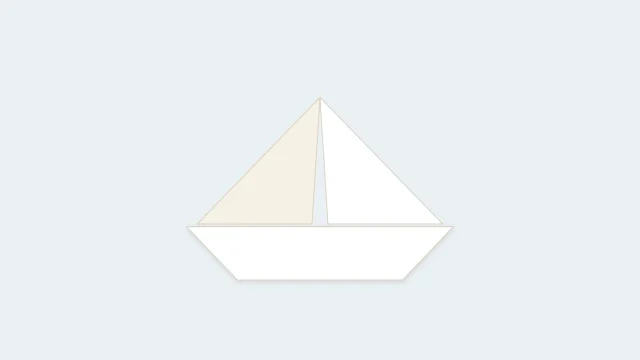
The paper boat starts from an ordinary rectangular sheet and teaches the open-and-flatten move that reappears in dozens of models. Includes the tweaks that keep it floating longer.

Six folds, no glue, and an object that really works for a few minutes. It is the model that best shows why lining up your points matters so much.
A flat heart with just a few folds that glues onto a card, strings into a garland, and seals a folded note. Also shows where to write a message so it lands on the finished heart.
The masu is the traditional Japanese paper box: straight walls, a firm floor, and no glue. The same sequence with a slightly larger square gives you the lid.
After the kite base, only three moves remain: fold it in half, raise the tail, and shape the fluke. Change the tail angle and the same model becomes a fish.
The jump depends on an accordion pleat at the back and on the weight of the paper. This guide explains both, plus the adjustment that makes the frog hop forward and not spin in place.
The difference between the dog and the cat is the angle of the ears and one fold at the chin. Just a few folds for each, none of them demanding pinpoint precision.
The flower comes from the waterbomb base and the stem from a second square, with a leaf that appears when you pull out the inner layer. The two pieces fit together without glue.
The lotus is repetition: the same move of folding the corners to the center, round after round, then turning the petals out one layer at a time. It works when the paper is thin and the center crease is light.
Folding the flowers is the easy part. What decides the result is the proportion between height and vase, an odd number of stems, and the trick of giving each flower a different height.
Four cuts, four points to the center, and a pin. What separates a pinwheel that spins from one that sits still is the slack between the pin and the paper, and nothing else.
The newspaper hat is the halfway stage of the paper boat, and you can stop right there. Here are three versions (classic, pirate, and painter) and how to size the paper to fit a head.
The same toy answers to fortune teller, cootie catcher, and chatterbox. Eight folds, plus a list of ideas for filling the flaps that goes beyond the usual fortunes.
Balancing a mobile is simple geometry: even weight at the ends, thread at the center of mass. This guide covers piercing, knots, spacing, and how to keep the pieces from spinning into each other.
One knot, a few wraps, and a pinch on each of the five sides. A lucky star needs no square and no diagram: only strips of paper, and getting their size right changes everything.
Four cuts, four points to the center, and a pin. What separates a pinwheel that spins from one that sits still is the slack between the pin and the paper, and nothing else.
The newspaper hat is the halfway stage of the paper boat, and you can stop right there. Here are three versions (classic, pirate, and painter) and how to size the paper to fit a head.
The same toy answers to fortune teller, cootie catcher, and chatterbox. Eight folds, plus a list of ideas for filling the flaps that goes beyond the usual fortunes.
The paper boat starts from an ordinary rectangular sheet and teaches the open-and-flatten move that reappears in dozens of models. Includes the tweaks that keep it floating longer.
What a four-year-old can fold alone is different from what an eight-year-old can, and the frustration almost always comes from offering the wrong model at the wrong age.
After the kite base, only three moves remain: fold it in half, raise the tail, and shape the fluke. Change the tail angle and the same model becomes a fish.
Start with models that take only a few folds, learn the bases, and move on at your own pace. Every tutorial on the site is free to read, no sign-up needed.